

Historical data notice: This article was originally published on January 27, 2020. The rankings below reflect the crime data analyzed for the original report and should not be interpreted as a current assessment of any CTA station, route, or neighborhood. Crime patterns, ridership, reporting practices, and CTA operations change over time.
What Historical Crime Data Showed About Chicago ‘L’ Stops
Chicago’s “L” is an essential part of the city’s transportation system, serving residents, commuters, and visitors across numerous neighborhoods. Although crime can occur on trains, platforms, and near stations, reported incident totals vary considerably among locations.
When this article was originally prepared, we reviewed publicly available Chicago crime data for incidents reported at CTA stations, on platforms or trains, or within approximately 100 feet of a station. The analysis was intended to identify patterns in reported incidents—not to declare that a particular station or neighborhood was inherently safe or dangerous.
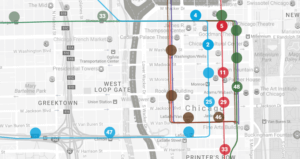
Original Findings From the 2020 Analysis
The original analysis produced the following results. These rankings are preserved for historical reference and are not intended to represent the current 2026 rankings.
- Station with the most reported incidents: Belmont on the Red Line
- Station with the most reported assaults and batteries: Belmont on the Red Line
- Station with the most reported robberies and burglaries: State/Lake, serving the Brown, Green, Orange, Pink, and Purple Lines
- Stations tied for the most reported sex offenses: Belmont, Argyle, and Grand on the Red Line, and Washington on the Blue Line
- Line with the most reported incidents: Red Line
- Line with the fewest reported incidents in the analyzed data: Yellow Line
Additional Findings From the Original Dataset
- The 47th Street Red Line station was the only station in the analyzed data associated with a reported homicide.
- The most frequently reported offense was pocket-picking, with 698 reports, followed by theft involving property valued under $500, with 688 reports.
- The Addison Brown Line station was associated with the dataset’s only reported offense categorized as sexual exploitation of a child.
- An arrest was reported in approximately 13.6% of the incidents analyzed.
- Approximately 43.5% of the reported incidents occurred aboard CTA trains, while 35.6% occurred at stations or on platforms.
How to Interpret CTA Crime Statistics
Raw incident totals do not necessarily measure the risk faced by an individual passenger. A busy downtown station may record more incidents partly because it serves substantially more riders than a lightly used station. Meaningful comparisons should consider ridership, the period studied, station configuration, nearby activity, changes in reporting practices, and whether an incident occurred aboard a train or at a fixed location.
Reported crimes also do not establish that a station caused or contributed to an incident. The data documents report on particular locations; they do not provide a complete picture of unreported conduct, prosecutions, case outcomes, or present-day conditions.
Sources for Current Chicago Transit Data
Readers seeking current information should consult the City of Chicago Crimes—2001 to Present dataset and the Chicago Transit Authority’s current ridership reports. Current conditions may differ materially from the historical findings preserved on this page.
About Michael J. Petro
Michael J. Petro is a federal criminal defense attorney with more than 35 years of experience representing individuals in investigations, trials, sentencing proceedings, and criminal appeals. Learn more about his criminal-defense practice areas.